Need mold inspection and testing in Los Angeles?
- Connects you with independent local mold providers nearby
- Inspection and testing
- Written quotes to compare
- Clear steps for first-timers
No obligation
Request an estimate today
Finding a dark spot or smelling something musty can be upsetting, especially if you have never dealt with mold before. You do not have to guess. A mold inspection looks for the mold you can see and the moisture that may be feeding it. Testing can then show what kind of mold is present and how much.
Involveestimate Mold Help is a referral service. We do not inspect or test anything ourselves. We connect homeowners in Los Angeles and the Los Angeles area with independent local providers who do. If you have been searching for mold inspection near me, we can help you take a calm first step. A clear report also protects your home and its value, because the next decisions rest on facts instead of worry.
It is normal to feel worried. Most homeowners feel that way the first time. The good news is that a mold problem is usually fixable, and a clear look at it is the smartest place to begin. Calm first, then fix.
An inspection answers a few simple questions. Is it really mold? How far has it spread? Where is the water coming from? Once you know that, you can plan the next step with confidence.
A few small steps can keep things from getting worse:
You do not need a reason to be careful. Still, some situations make an inspection especially wise. A recent leak or storm is one. So is a musty smell that will not go away, or someone in the home who keeps coughing or sneezing indoors. Buying or selling a home is another good time.
Older bungalows and many tract homes from the 1950s to 1980s have small spots where moisture can hide. Slab and raised foundations can both trap damp air. Winter rain events can push water into places you rarely look.
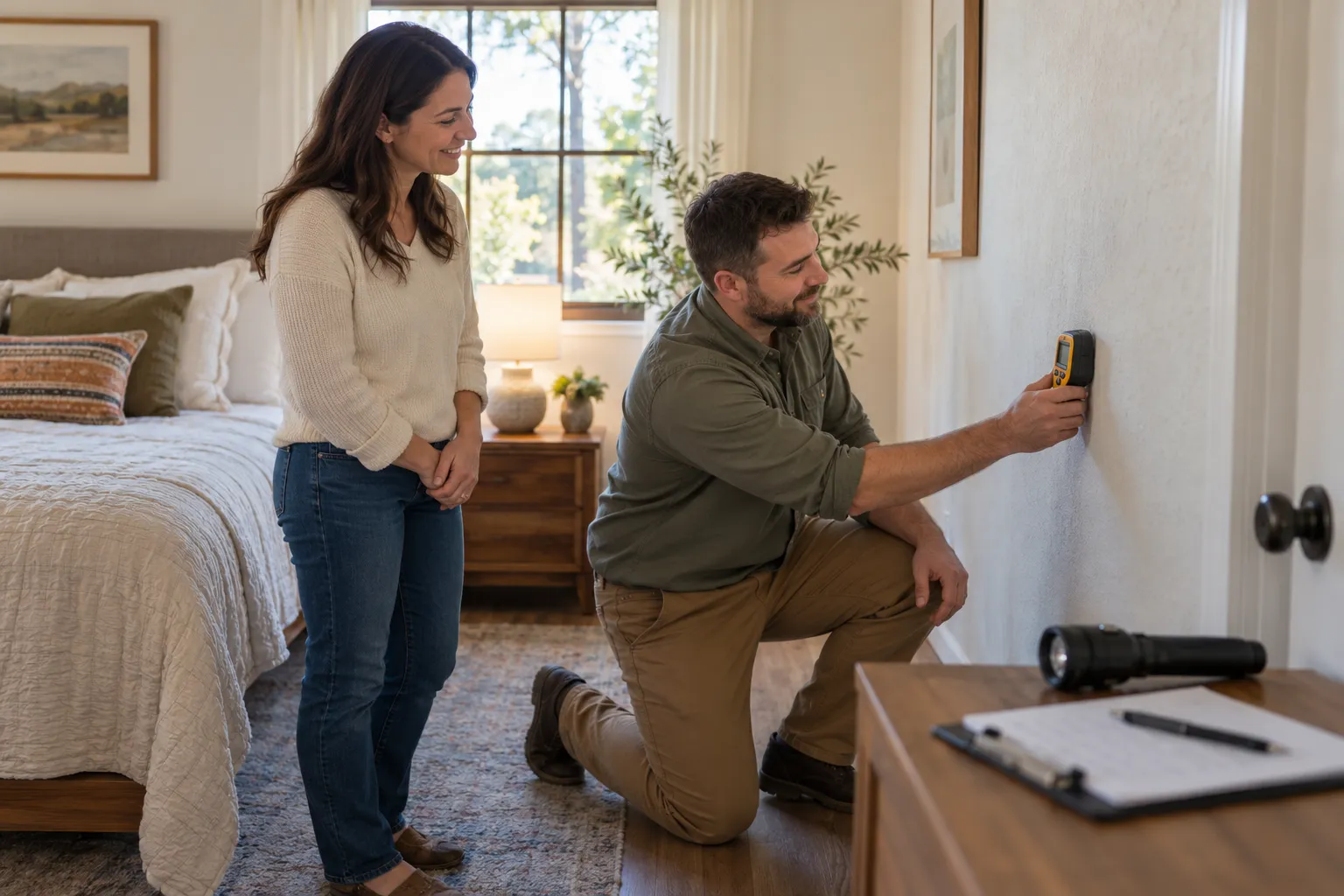
The visit is usually calm and quiet. The provider walks through your home and asks about leaks, smells and health concerns. Then they look closely at the rooms you point out. They check walls, ceilings, attics, under sinks and around windows.
Most use a moisture meter. Many also use a thermal camera to spot cool, damp areas behind surfaces. Expect photos and notes. A visit often takes one to three hours, depending on the size of the home.
Mold needs water to grow. That is why a good inspector hunts for the source, not just the stain. A roof leak, a bad seal or poor airflow can all be the cause. If the water source stays, the mold tends to return.
Not every inspection needs lab tests. Sometimes the problem is plain to see. When testing helps, a provider may suggest one or more of these:
If you want certified mold testing, ask whether the lab that reads your samples is accredited. Smoke seasons and dusty weather can affect outdoor air, so a careful provider will explain how that may shape the results.
A lab report can look like a page of strange names. A good provider will walk you through it in plain words. Ask them to show which rooms were tested and what was found in each.
Some mold spores are in every home, so seeing a few is normal. What matters is the kind, the amount and where it is growing. Results are one piece of the picture. They make the most sense alongside what the inspector saw and measured.
"Black mold" is a phrase that scares many people. Color alone cannot tell you the type. Only testing can. If you are worried about black mold remediation later, start with an inspection so you know what you are dealing with.
Some providers do both jobs. Others only inspect. Each choice has a place. A separate inspector has no stake in the cleanup work, which some homeowners like. A provider who does both may be simpler to schedule.
Either way, ask for the findings in writing. That lets you compare quotes for residential mold removal if you need it. It also keeps everyone working from the same plan.
A little prep helps the provider work well:
It is fine to ask plenty of questions. Here are a few good ones:
A clear, written inspection is useful far beyond today. It shows buyers and lenders that you took care of the home. Fixing the cause, not just the stain, keeps small problems from growing into costly ones. Protect your home by starting with facts.
A close look at walls, ceilings, attics and damp spots where mold likes to hide.
Meters and cameras help trace where water is getting into the home.
Air, surface or bulk samples when testing will add useful information.
Plain findings you can keep, share with a repair provider, or show a future buyer.
Prices vary with home size, number of samples and the provider. These are typical U.S. ranges only. Always ask for a written quote before you agree to any work.
| Item | Typical range | Notes |
|---|---|---|
| Visual inspection with moisture readings | $300 – $700 | Often the starting point for most homes |
| Air sample (each) | $50 – $150 | Usually plus an outdoor comparison sample |
| Surface or tape sample (each) | $30 – $100 | Lab fees may be extra |
| Thermal imaging or moisture mapping | $100 – $400 | Sometimes included in the inspection |
| Larger home with several samples | $500 – $1,500 | Depends on rooms, attic and crawl space |
| Follow-up check after cleanup | $200 – $600 | Confirms the work area is ready to close up |
Share what you have seen or smelled, and where, using the request form.
We connect you with an independent local provider in our network.
They check for moisture and mold, and may take samples if needed.
The provider explains the results and what next steps, if any, make sense.
Facts about what is growing and where help you choose repairs without guessing or overspending.
Tracing moisture helps stop mold from coming back after cleanup.
A clear report can calm worries and show what really needs attention.
Written records show future buyers that you cared for the home.
Look for musty smells, spots that return after cleaning, recent leaks or water stains. If you are buying or selling, or someone has ongoing symptoms indoors, an inspection can help. A local provider can tell you if testing is also useful.
It can be when you need to know the type or amount of mold. If mold is plainly visible, testing may not add much. A provider can advise which tests fit your situation.
Some policies may cover sudden damage, like a burst pipe, but many exclude slow leaks. Check your policy and ask your agent. Providers can often help document damage for a claim.
Have a question or see signs of mold? Send a note to contact@involveestimate.garden or request an estimate, and a local provider in the Los Angeles area can follow up.
No obligation