Need mold remediation in Los Angeles?
- Connects you with independent local mold providers nearby
- Inspection and testing
- Written quotes to compare
- Clear steps for first-timers
No obligation
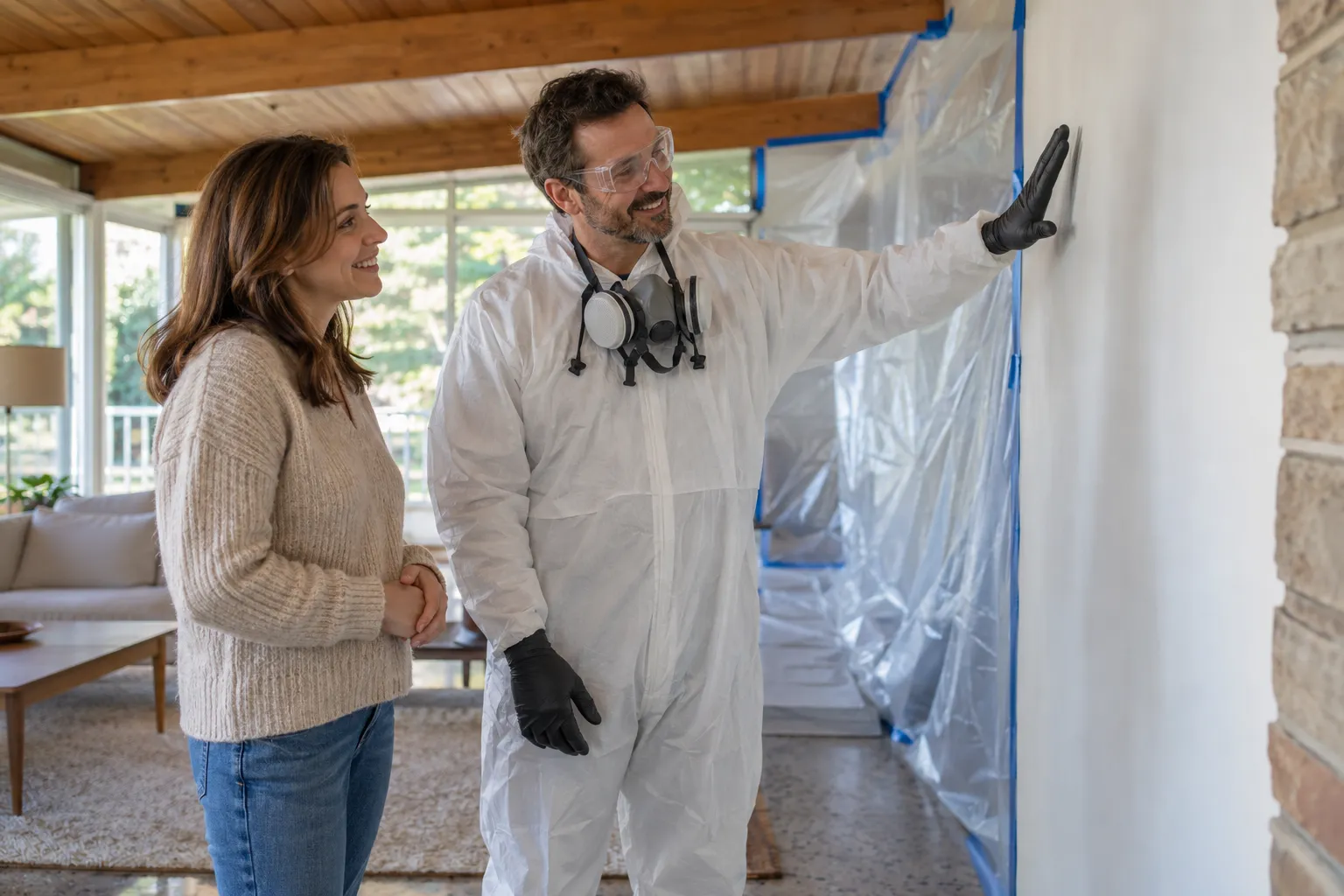
Finding mold in your home is stressful, especially the first time. You may wonder how bad it is, whether it is safe to stay, and who to trust. Mold remediation is the process of finding the moisture, containing the mold, removing it, and cleaning the area so it is far less likely to return.
Involveestimate Mold Help is a referral service. We do not do the work ourselves. We connect homeowners in Los Angeles, CA and the Los Angeles area with independent local providers in our network who handle residential mold removal, including black mold remediation. You can request an estimate, compare your options, and move forward at your own pace. The goal is simple: protect your home and its value for the years ahead.
Seeing mold on a wall or smelling it in a closet can make your stomach drop. That is normal. Most homeowners have never dealt with it before.
Here is the good news. Mold is common, and it can be fixed. The first step is to stay calm and avoid scrubbing or spraying it. Disturbing mold can spread spores into other rooms.
If you searched for mold inspection near me because you are not sure what you have, that is a fine place to begin. You can read about inspection and testing on its own page. This page is about what happens when mold needs to be removed.
Mold needs moisture, food and time. Your home gives it plenty of food. Drywall, wood, carpet and dust all work.
Once a damp spot stays damp, mold can spread into hidden places. It can grow behind walls, under floors and in attics. A small patch you see may be only the edge of a bigger problem.
Waiting also puts your home at risk. Mold can stain and soften building materials. Damaged drywall and framing cost more to replace than to clean early. Dealing with it sooner helps protect your home value.
Some signs are easy to spot. Others are quiet. Look for:
One sign alone does not prove a big problem. Several signs together are a good reason to ask a provider to take a look.
The steps can vary by job, but most providers follow a similar path. They check the size of the problem. They set up barriers to keep spores in one place. They clean the air with special filters. Then they remove or clean the affected materials.
Some materials can be cleaned, like solid wood. Porous ones, like wet drywall or insulation, are often removed. After that, the area is dried and cleaned again. A provider may also talk with you about rebuilding what was taken out.
Containment means sealing off the work area. Providers often use plastic sheeting and keep the air moving in one direction. This helps stop spores from drifting into clean rooms.
This step protects the rest of your house. Without it, a small job can turn into a larger one. When you compare estimates, ask how each provider plans to contain the area.
Black mold remediation gets a lot of attention, and the name sounds frightening. In truth, color alone does not tell you how risky a mold is. Many kinds look dark.
What matters more is the size of the area, how long it has been there, and who lives in the home. Young children, older adults and people with breathing issues may need extra care. A good provider will explain the plan in plain words and will not pressure you.
Cleaning mold without fixing the water problem is like mopping with the faucet running. The mold will likely come back.
Common causes include roof leaks, plumbing drips, poor bathroom venting and damp crawl spaces. In many regional homes, like older bungalows and stucco ranch houses, moisture can also sneak in after winter rain events or through slab and foundation cracks. Even in dry seasons, a hidden pipe leak can feed mold for months.
A provider can often point out the likely source. Some will fix small issues. Others may suggest a plumber or roofer. Either way, plan to solve the cause as well as the symptom.
Insurance can feel confusing. Some policies may cover mold that comes from sudden damage, like a burst pipe. Others limit or exclude it, especially when it comes from long-term leaks or neglect.
Check your policy and ask your insurer before work starts. Providers can often help document damage for a claim with photos and written notes. Keep your own records too, such as dates, receipts and messages.
Take your time and ask questions. A trustworthy provider is happy to explain.
Be careful with anyone who rushes you or gives a price without seeing the space. Every home is different, so a fair estimate starts with a look at the problem.
When the work is done, the area should look and smell clean. Many homeowners ask for a follow-up check to confirm it. This gives you peace of mind and a record that can help at resale.
Keep your home dry from here. Run bath fans, fix leaks fast, and watch humidity. Keep paperwork from the job in one folder. Future buyers like to see that a problem was handled properly.
The provider looks at how far the mold has spread and where the water is coming from.
Barriers and filtered air help keep spores from drifting into the rest of your home.
Damaged materials are removed and surfaces are cleaned.
The space is dried and cleaned again, then checked so you can rebuild with confidence.
Prices depend on the size of the area, the materials involved and how hard the space is to reach. These are typical U.S. ranges only. Always ask for a written quote for your own home.
| Item | Typical range | Notes |
|---|---|---|
| Small patch cleanup | $500 – $1,500 | Usually a small, easy-to-reach area |
| Single room | $1,500 – $3,500 | Often includes containment and air filtering |
| Attic or crawl space | $2,000 – $6,000 | Tight spaces can raise labor time |
| Widespread, whole-home mold | $5,000 – $15,000+ | Larger jobs may need rebuilding too |
| Moisture source repair | $200 – $3,000+ | Depends on the leak, vent or drainage issue |
| Drywall or insulation replacement | $500 – $3,000 | Needed when materials are too damaged to clean |
Share where the mold is, how large it looks, and any leaks or smells you have noticed.
Involveestimate Mold Help connects you with an independent provider serving Los Angeles and nearby areas.
Compare the written plan, ask questions, and choose the provider that feels right.
Agree on timing, containment and moisture repair before the work begins.
We explain the process in plain words, so a first-time homeowner knows what to expect.
You are matched with local providers in our network who do the actual mold work.
We do not promise results or prices. Each provider gives you a written estimate.
A job done right helps protect your home and its resale value.
Often yes for small spots, but it depends on the size, your health and who lives there. Avoid disturbing the mold, and ask a provider for advice. Talk to a doctor about health concerns.
Small surface spots on hard materials may be cleaned by homeowners with care. Bleach often does not solve mold on porous materials, and the moisture must be fixed. For larger areas, ask a local provider.
Small jobs can take a day or two, while larger ones can take several days or more. Drying and rebuilding add time. A provider can give you a realistic schedule after seeing the space and writing your estimate.
Have a question or see signs of mold? Send a note to contact@involveestimate.garden or request an estimate, and a local provider in the Los Angeles area can follow up.
No obligation